Angels in America by Tony Kushner, produced by Invictus Theatre
When people hear that we’ve seen nearly 5,000 shows, they frequently ask which one is our favorite. Until we saw Invictus Theatre’s Angels in America, we had no answer, nor were we sure that a meaningful answer was possible. But literally seconds into the opening performance of Angels in America Part 1, we sensed that something very special was unfolding, both on stage and in the audience’s communal reactions. By the time Part 2 ended (seven hours of running time later), its impact on us was so profound, so singular, that we now had an all-time “favorite show,” indelibly moving and meaningful. We subsequently saw the production five more times over the course of the 13-week run, each time delving deeper into playwright Tony Kushner’s monumental play and the transcendent Invictus production.
What Angels in America Means to Us
This gargantuan, two-part “Gay Fantasia on National Themes,” about the onset of the AIDS epidemic and the political currents surrounding it, is breathtaking in its scope and virtuosity. Part 1, Millennium Approaches, premiered in 1991 and Part 2, Perestroika, premiered in 1992.
For a play whose content is ostensibly wedded to the 1980s, Angels in America at its core is remarkably timeless and remains highly relevant today, as malevolence, discrimination, and callous disregard for human suffering remain rampant. Our first opportunity to see Angels was in 1996 (a very capable production at the Station Theatre in Urbana, IL). It provided our first significant education on the AIDS crisis and the individuals and communities who were at ground zero of the tragedy, and opened the door for us to empathize with people who were invisible in the environments where we grew up. In doing so, Angels fundamentally changed us for the better, while also greatly expanding our notion of what theatre can be and do.
Part of the playwright’s genius was in particularizing his cosmic themes to relatable characters, whether sympathetic or reprehensible. We’ve treasured our opportunities to revisit those characters and their journeys, always learning, laughing, crying, and pondering why history repeats itself. We continue to find Angels in America to be a mind-expanding and enriching theatrical experience unlike any other.
NOTES:
A complete list of Invictus’s cast and crew members is included near the bottom of this page, followed by a selection of quotes from each of the show’s reviews. For links to the full text of the reviews (all rated the show HIGHLY RECOMMENDED), see Theatre in Chicago’s Review Roundup.
Production photos are by Aaron Reese Boseman Photography. Click on a photo to view a larger version in a new tab.
What Invictus’s Production Meant to Us
We had seen 10 previous productions of Angels in America, but none prepared us for the unparalleled experience of the Invictus production.
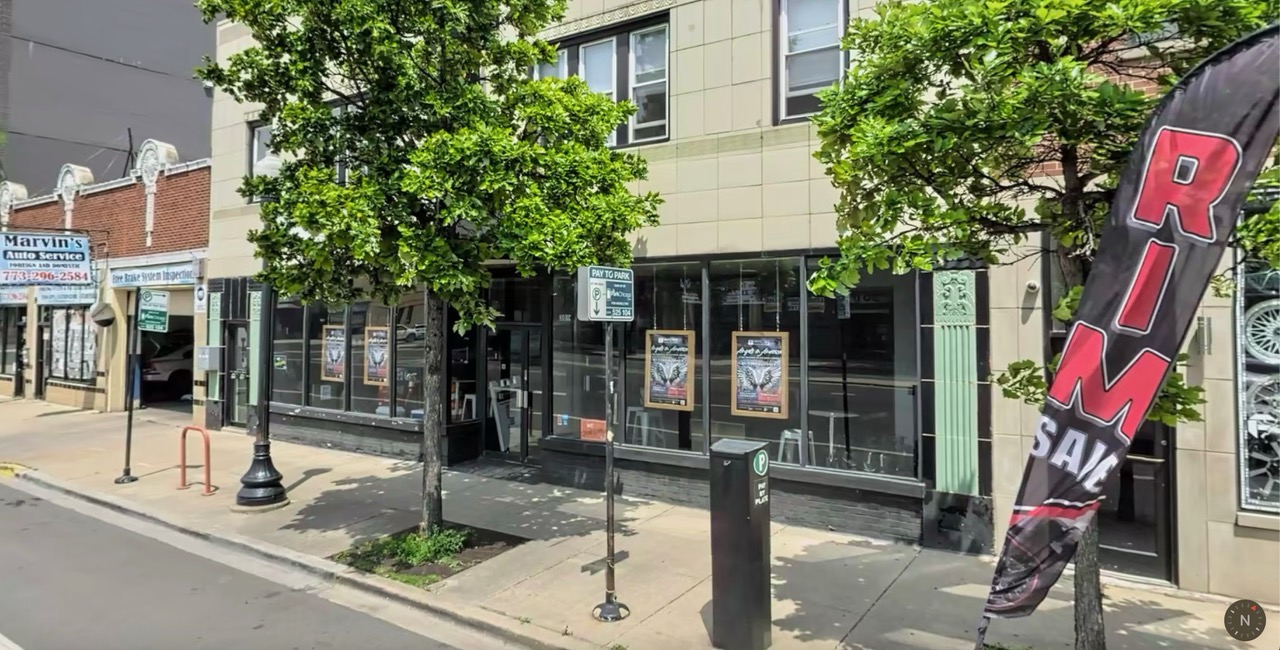
with adjacent auto shops
From the outset, we were struck (and excited) by the magnitude of the challenge inherent in producing Angels in America in a modest-budget, low-tech setting (but with a mercifully high ceiling). And yet, here in a storefront theatre wedged between two auto repair shops on Irving Park Road in Chicago, magic happened!
Over the course of the Angels in America run at Invictus (and since then), we’ve spent many enjoyable hours pondering what made this production so off-the-charts phenomenal. Here are the reasons (and some specific examples) that floated to the top of our list…
Cast
Several hundred actors auditioned for Invictus’s Angels in America, eager to take on what’s generally viewed as the role of a lifetime (accompanied by a grueling workload, spanning more than six months of rehearsals and performances). Chicago audiences are accustomed to seeing phenomenal actors, acclaimed for their deep and fearless dives into complex characters. Even by those standards, however, the unique magic of Invictus’s Angels cast far exceeded any reasonable expectations.
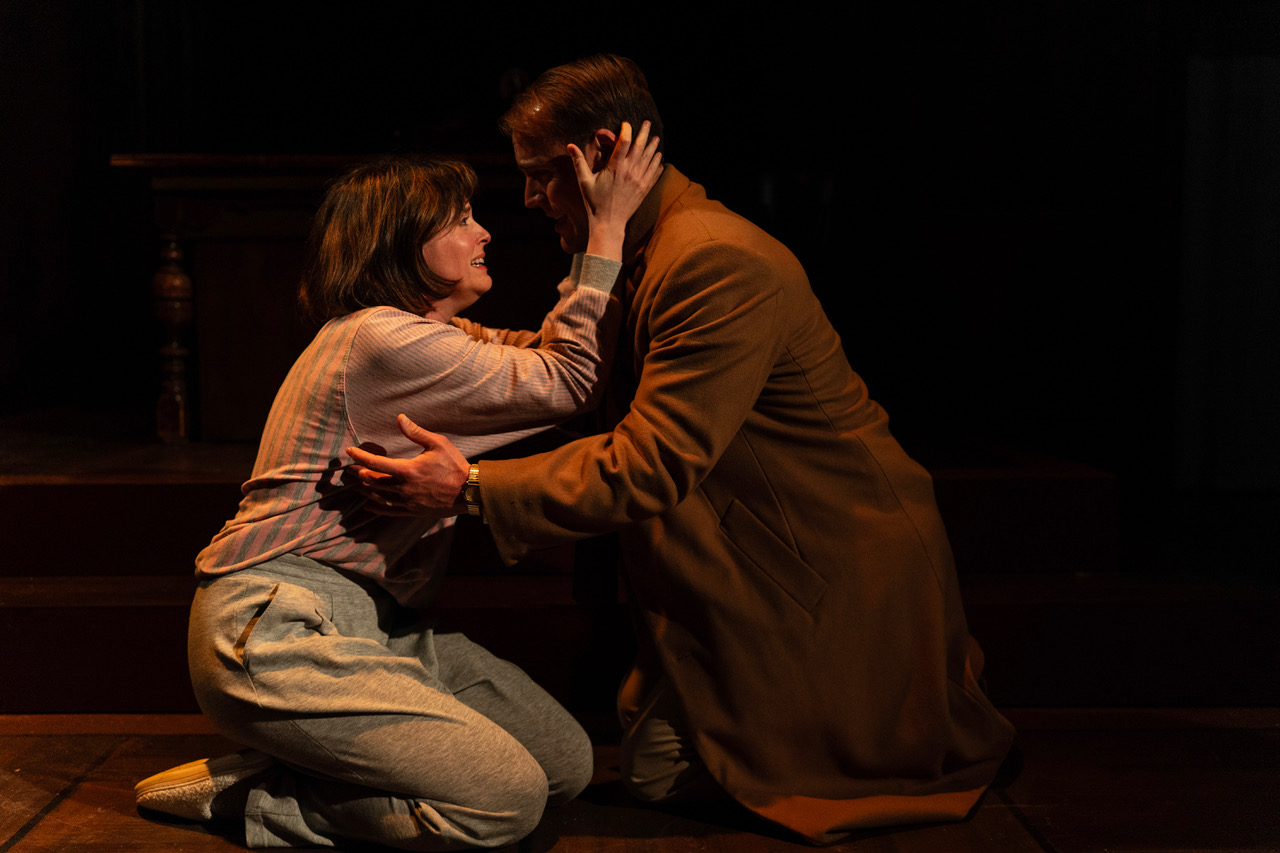
In a very palpable sense, we felt that we genuinely got to know every character intimately, thanks to each actor’s ability to embody realistically complex human relationships, vulnerabilities, and personal journeys. The experiences and feelings depicted were deep and raw, played with phenomenal courage. We offer our heartfelt appreciation to the actors for the physical and emotional labor that enabled them to connect us so meaningfully with their characters.
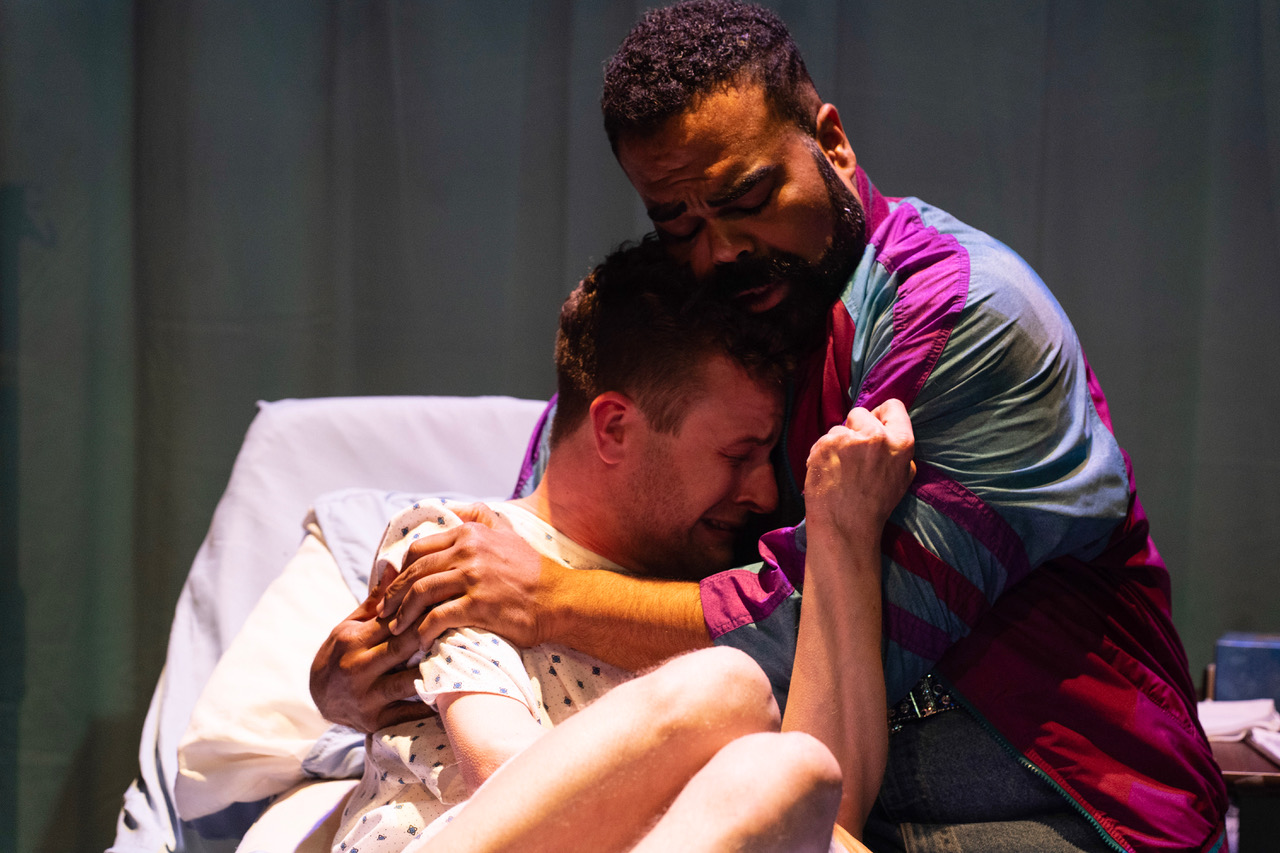
The passionate commitment of the cast in telling this story forcefully and truthfully was evident in their work. Before each performance, the cast would read together an entry from The AIDS Memorial, where thousands of people have shared deeply personal stories of a loved one who died from AIDS. Then the cast would dedicate the upcoming performance to that individual.
Design and Execution
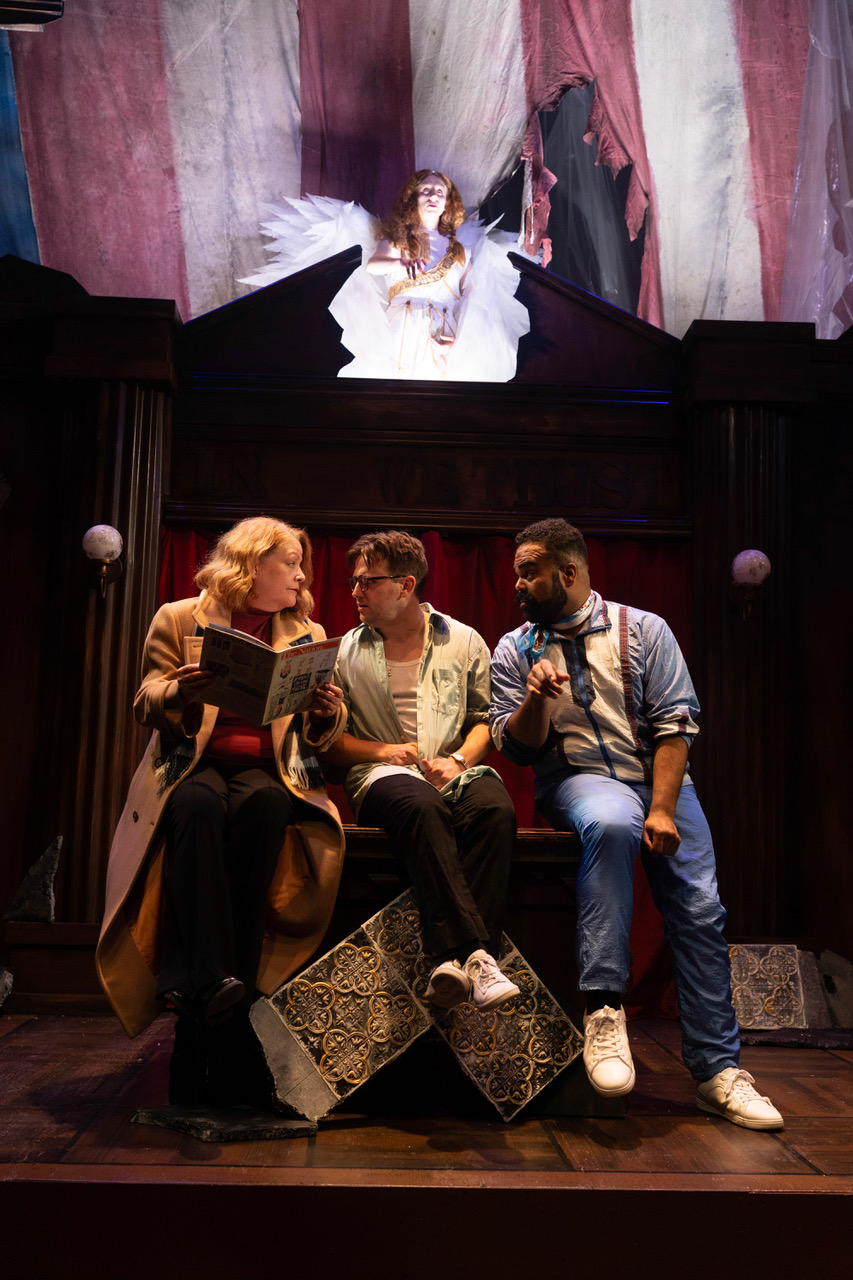
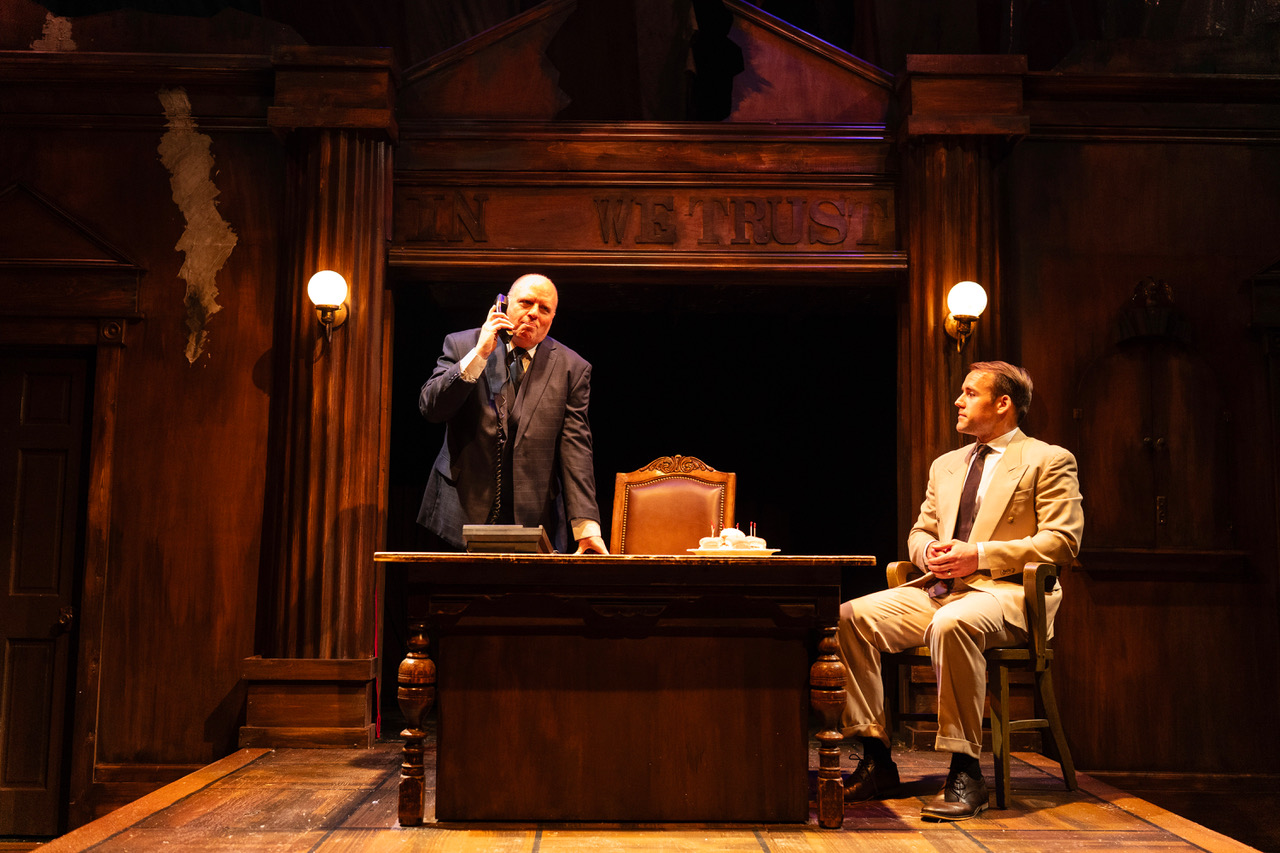
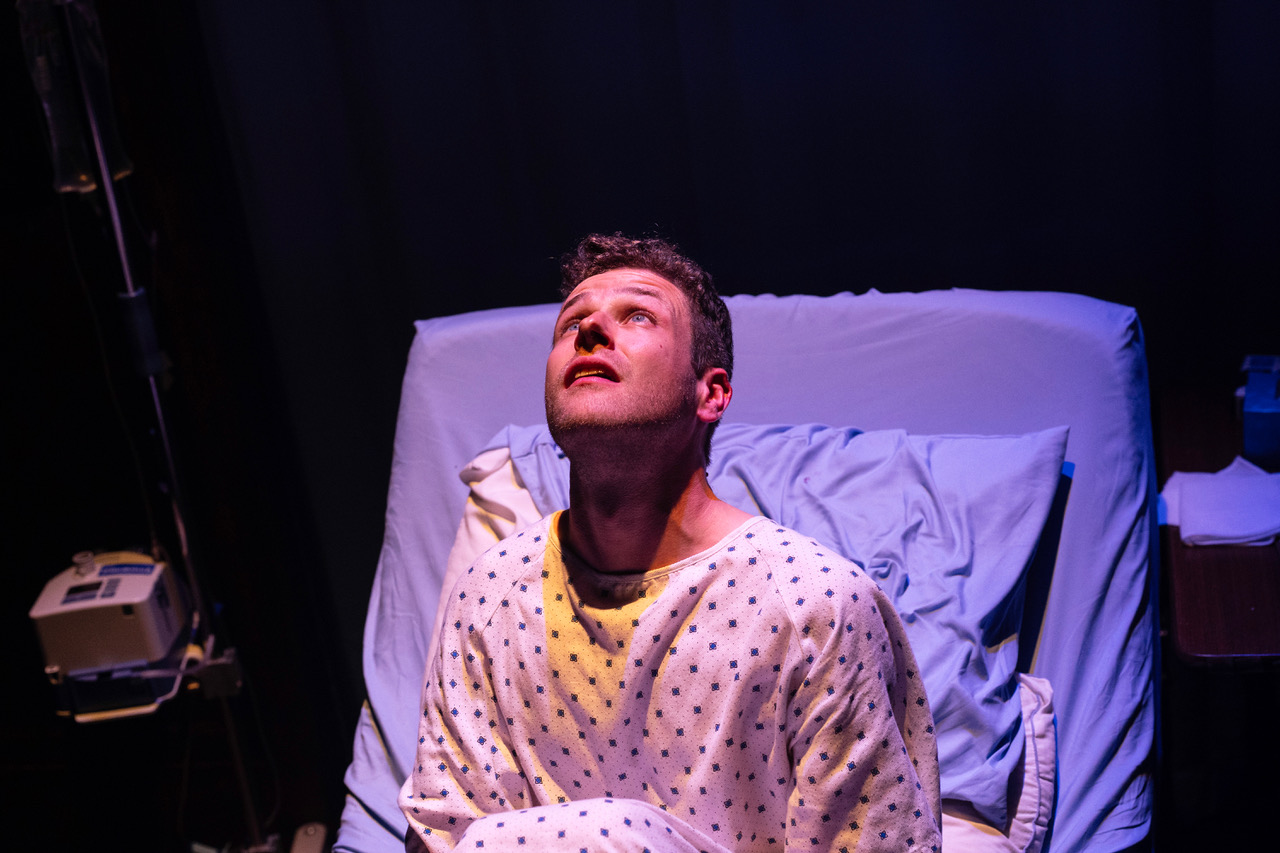
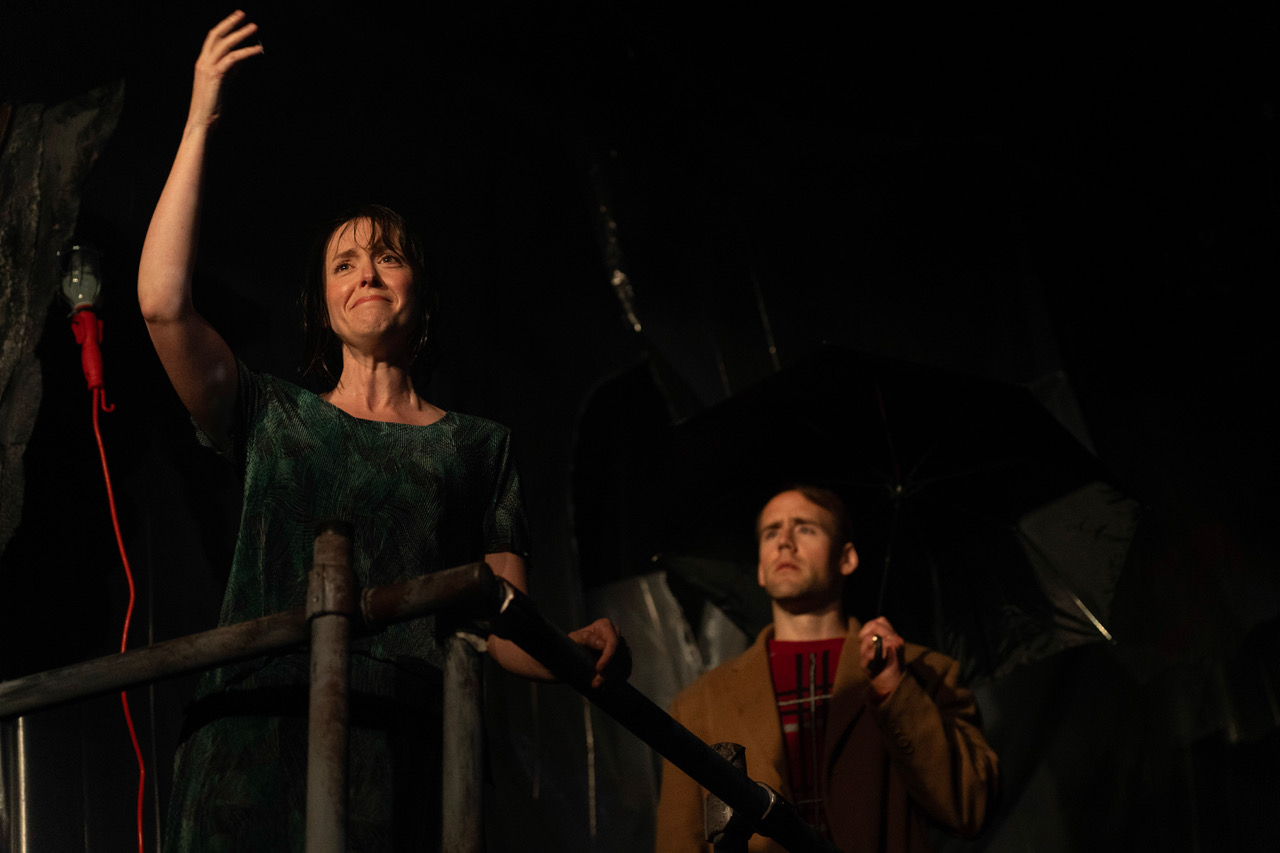
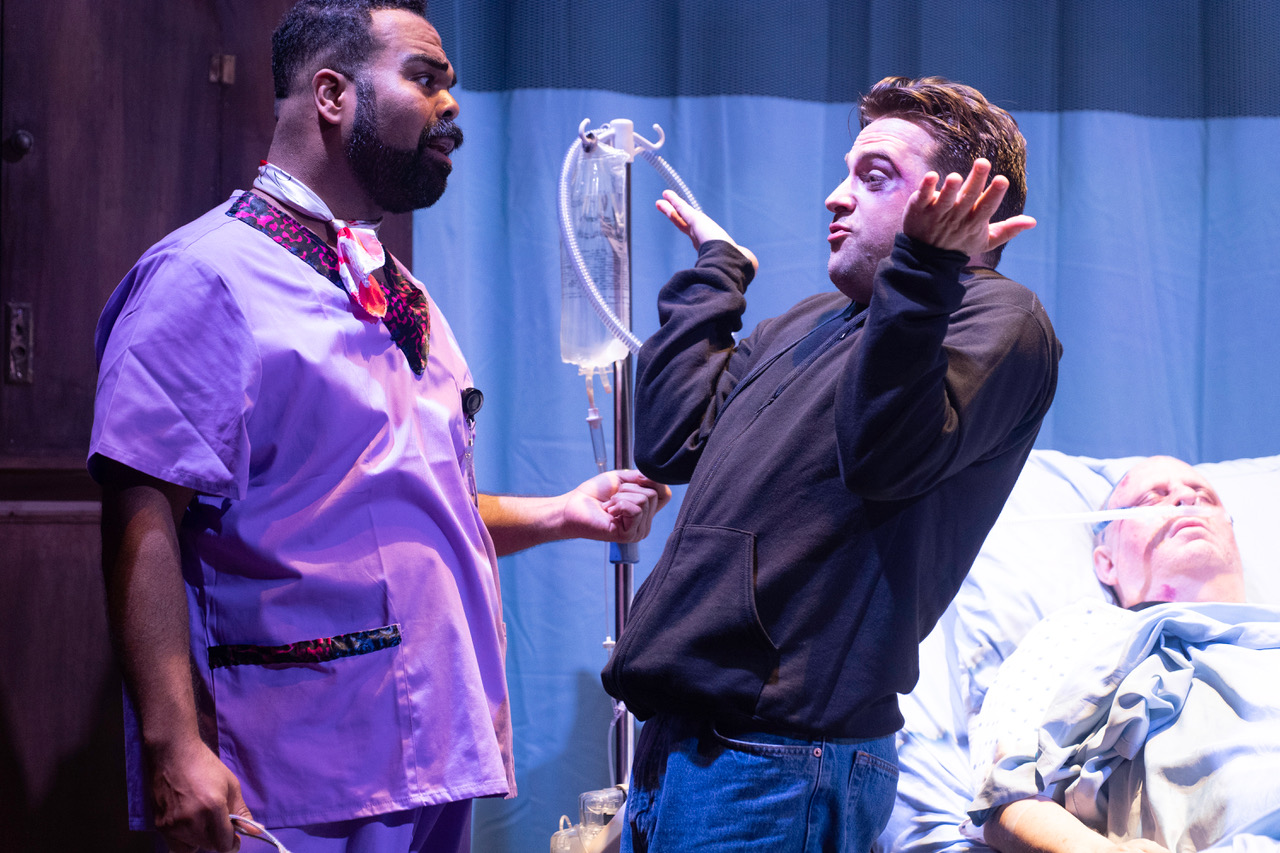
Though the space was intimate, with only 90 seats, the relatively high ceiling allowed the designers to add a heavenly dimension to the set, from which angels, snow, or rain could descend. The earth-bound portion of the set design suggested that America’s most solid institutions are godforsaken (in the literal sense) and cracking wide open. The space, aided by evocative lighting and perfectly chosen props, also served brilliantly as a versatile playing area for scenes set in offices, apartments, streets, parks, a courthouse, and the inevitable hospital ward, among others (and did we mention Antarctica?). The resulting instantaneous transitions from one scene to the next left no dead time, and thus no chance for the audience’s emotional investment to dissipate.
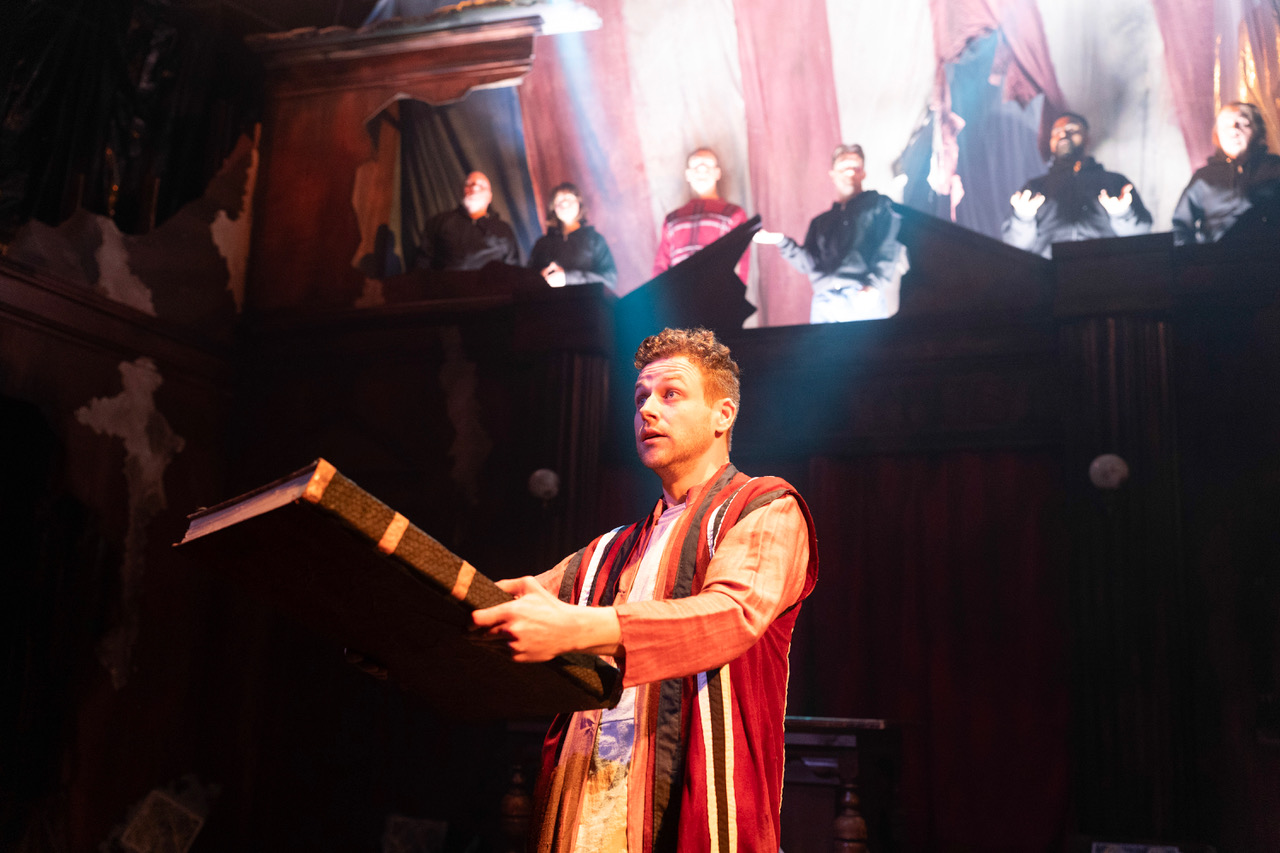
The various design elements—set, costumes, lighting, sound, projections, props—worked uncommonly well together to achieve impressively realistic effects despite the relatively low-tech resources available. For example, small amounts of fake snow (hand-sifted by someone inconspicuously stationed on the upper level of the set) were augmented by an ethereal projection of seemingly tangible falling snow. In other instances, perfectly calibrated sound and lighting effects accompanied visual signs of a world shaken to its core, eliciting audible gasps from the audience.

One of the most amazing accomplishments of the production team was how they pulled off the seven-plus hours of running time—including hundreds (thousands?) of lighting cues, sound cues, projections, and props—using only a minimal running crew, namely a single stage manager at the light/sound board and one assistant stage manager backstage. In addition, the show’s eight actors play more than two dozen roles, often necessitating lightning-fast backstage transformations (wardrobe, wigs, etc.) facilitated by the other actors. This was undoubtedly a carefully orchestrated backstage collaboration, made possible by a cohesive and caring cast and crew.
The Angel
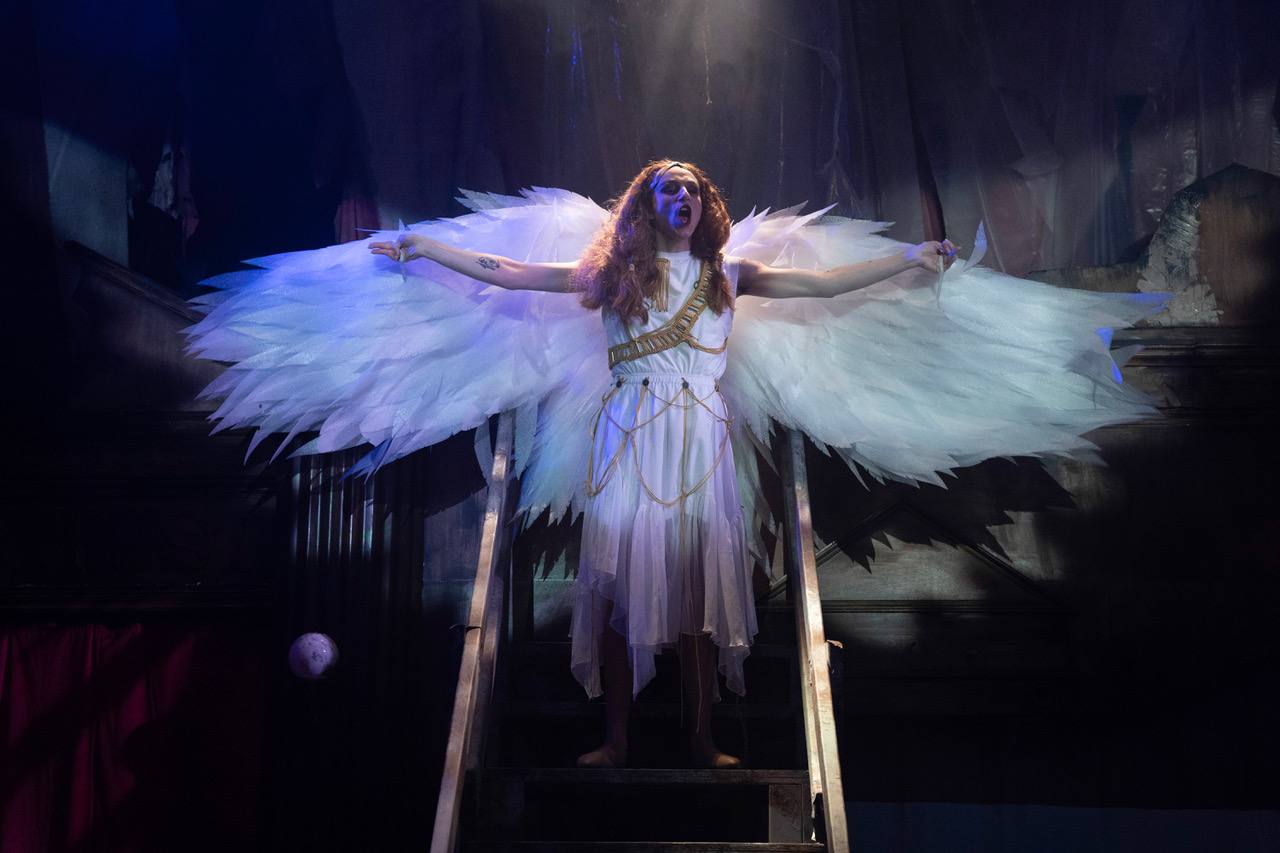
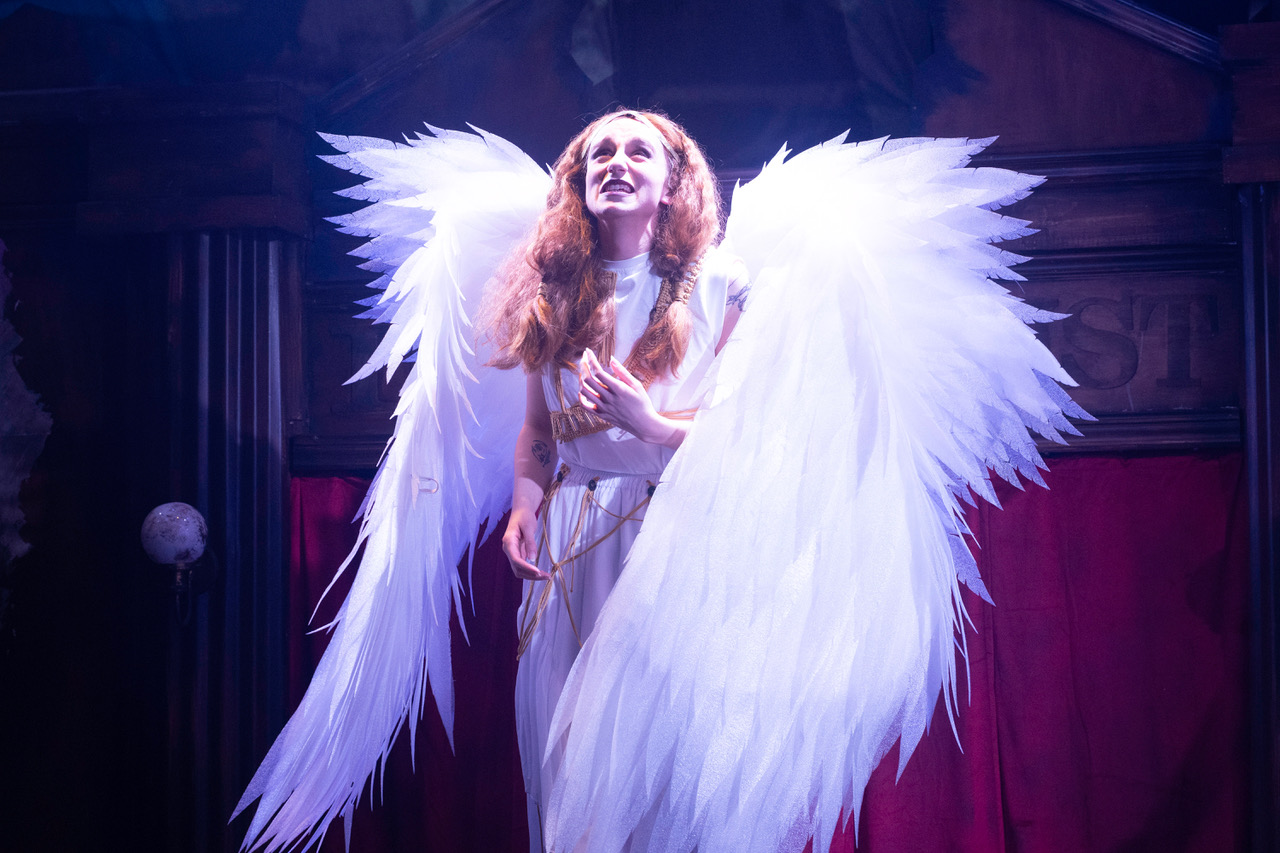
The realization of the Angel warrants special mention. Invictus’s Angel was elegantly but unostentatiously costumed, and her glorious wings seemed eminently practical, light enough to fly, rather than the heavy monstrosities we’ve seen before that appear to defy rather than enable flight. And there was no phony, Peter Pan style flying at the end of a wire. Instead the Angel descended (and ascended) a movable staircase. The net effect was to enable the Angel to be fully integrated into the action and interact naturally with the human characters. Consequently, our focus remained steadfastly on the angel’s message and the great work ahead, rather than on her mode of transportation.
Putting It Together

Tackling the colossal Angels in America takes a village, but the village must include someone at the top ensuring that all the moving parts are in sync and in service of the shared goal of bringing this “greatest American play” to life. Starting with the audacious idea of doing Angels in a storefront theatre (in rotating repertory, no less), all the way through the extended run, Invictus Artistic Director and production director Charles Askenaizer was the mastermind guiding the daunting enterprise.
Every minute of the seven-hour running time was grounded by an uncompromising attention to detail, which immeasurably enhanced the verisimilitude, and thus the human impact. One wonders how many hours of contemplation and creative thinking went into crafting a production design this all-encompassing and unfailingly effective.
Yet another distinguishing trademark of this production was the uniformly immaculate care with which every scene was staged, from the most pyrotechnic to the most quietly profound. We’re not exaggerating when we say that every single scene of this production (26 in Part 1 and 32+epilogue in Part 2) was an absolute gem—a remarkable accomplishment thanks to the director’s skill and comprehensive vision, in collaboration with a truly remarkable cast and crew!
Conclusion
Experiencing Invictus Theatre’s Angels in America was not only a supreme highlight of our theatre-going adventures, but ultimately a transformative and unforgettable high point in our lives.
The timing of this production further heightened the impact of Invictus’s impeccable and fearless work. The show opened on June 29, 2025, the day before the 54th annual Chicago Pride Parade, against the backdrop of a renewed vile assault on the rights and humanity of LGBTQ+ people, as well as other vulnerable populations. It was clear that cast, crew, and audience members felt the urgency and efficacy of “the great work” articulated in Angels in America.
We are convinced that what we experienced could have taken place only in a Chicago storefront theatre like Invictus, where intimacy, talent, resourcefulness, trust, tenacity, and deep reverence for the playwright’s intent melded into life-changing art. Invictus Theatre’s Angels in America prompted ongoing discussions not only of the play’s deep lessons and insights, but also about the return of Chicago storefront theatre at its best—supremely daring, while laser-focused on humanity and truth.
We’re forever grateful to the artists, fellow audience members, and theatre community with whom we shared this journey.
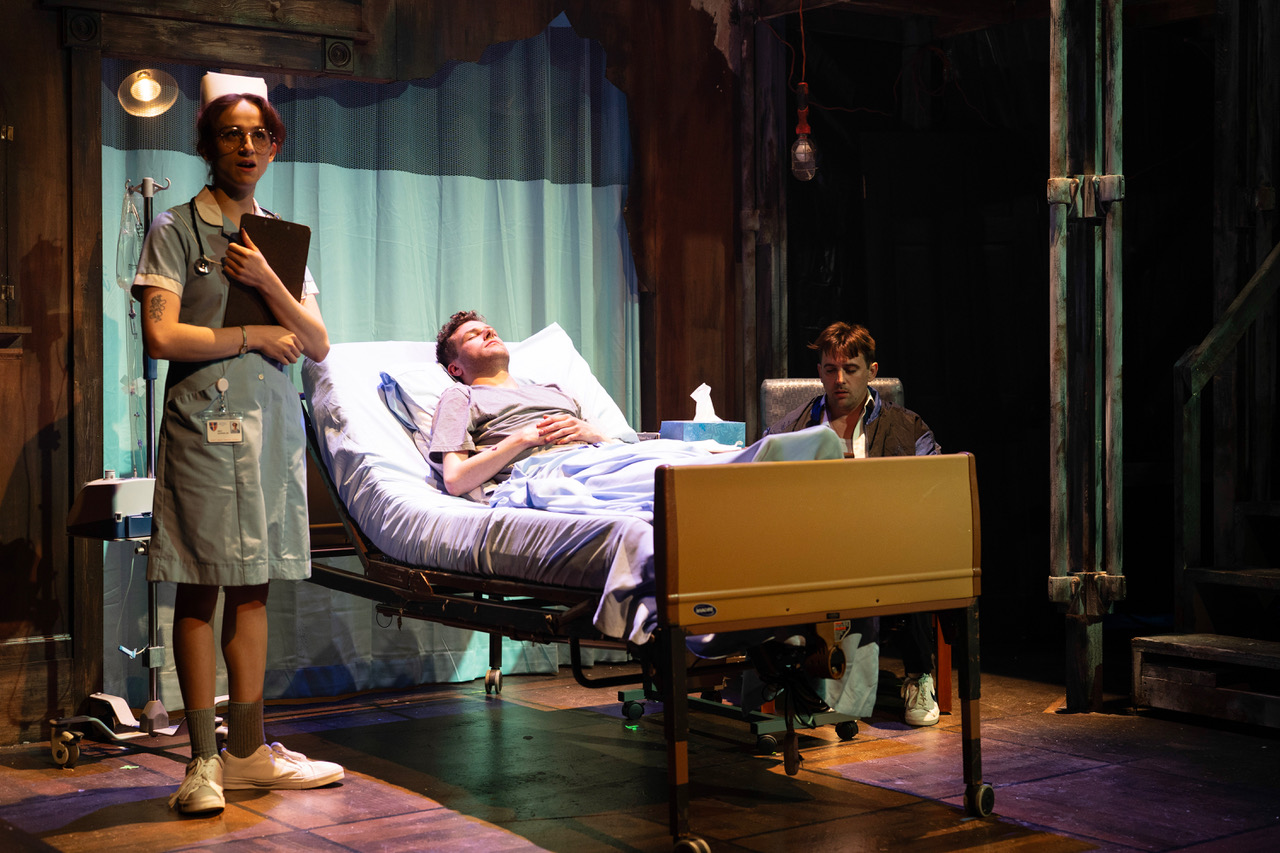
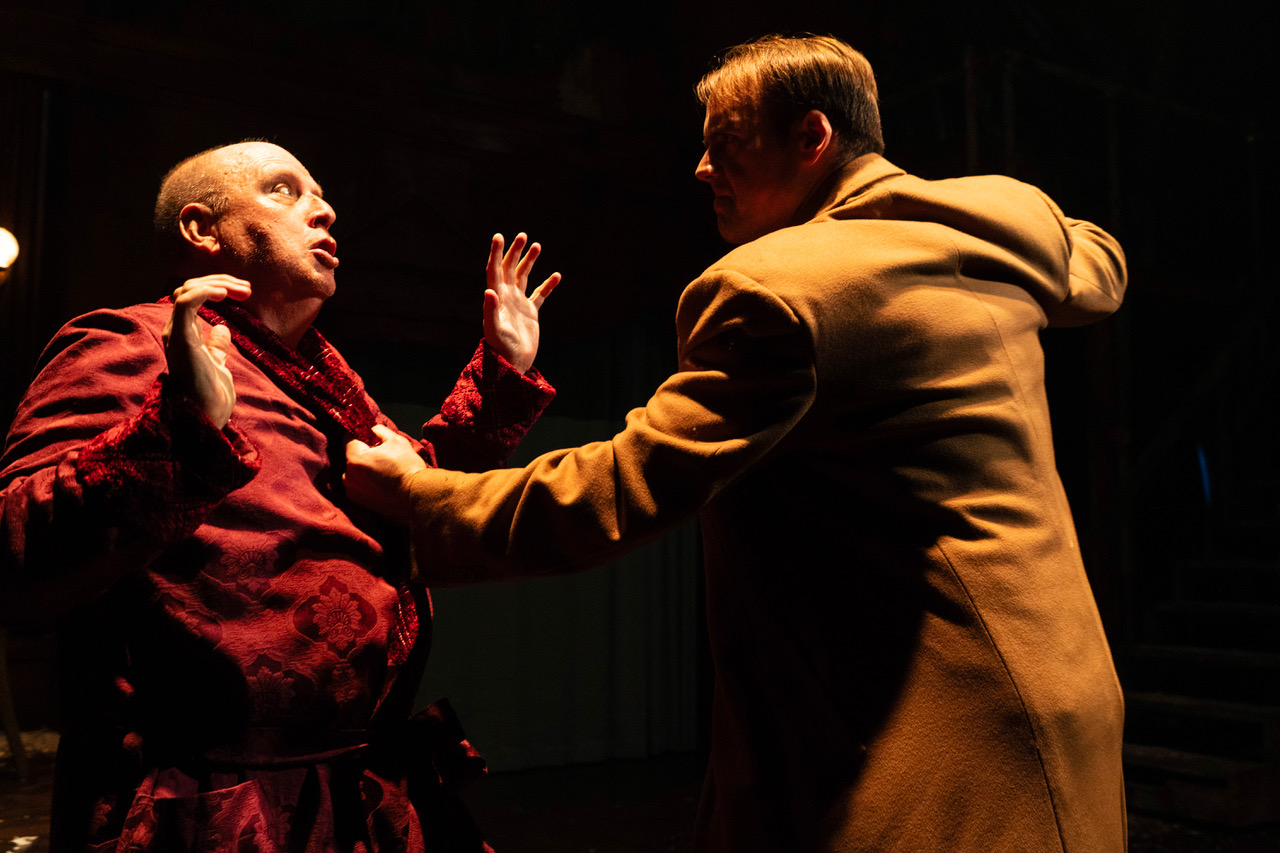
Cast: primary (understudy)
Belize – Miguel Long (Michael Ashford)
Hannah Pitt – Renae Stone (Ana Ortiz-Monasterio)
Harper Pitt – Anne Trodden (Rachel Livingston)
Joe Pitt – Joe Bushell (Reid Harrison O’Connell)
Louis Ironson– Grant Carriker (David Lipschitz)
Prior Walter – Ryan Hake (Brenden Zwiebel)
Roy Cohn – Michael D. Graham (Shane Roberie)
The Angel – Nicki Rossi (Michaela Voit)
Crew
Director – Charles Askenaizer
Assistant Director – Kevin Rolfs
Executive Producer – Todd Henry Faulstich
Production Manager – Stacy Scapino
Stage Manager – Sam Flipp
Assistant Stage Manager – Beep Trefts
Scenic Designer – Kevin Rolfs
Technical Director – Tom McNelis
Properties Designer – Rachel Livingston
Costume Designer – Jessie Gowens
Assistant Costume Designer – Anika Splettstoeszer
Wig and Makeup Designer – Hannah Andruss
Sound Designer – Petter Wahlbäck
Lighting Designer – Brandon Wardell
Assistant Lighting Designer – Max Garcia
Production Electrician – Mark Brown
Violence and Intimacy Designer – Jay Donley, Violent Delights
Projectionist – G. “Max” Maxin IV
Dialect Coach – Ian R. Q. Slater
Dramaturg – Hans Herrera
Cultural Consultant – Aimee Kleiman
Casting Director – Becca Holloway
Marketing Manager – MC Dougherty
Marketing Associate – Diego Longoria
Graphic Designer – Ana Schedler, SCHEDLER BRENNAN design + consulting
Review Quotes
Allie and the After Party — Alexis Bugajski
Angels is a heavy show to begin with and these actors bare everything and give us raw, fully formed performances that make us feel exhausted for them with how much they give in their deep and moving performances.
Around the Town Chicago — Mark Reinecke
The production at the Invictus is both grand and intimate. It succeeds gloriously in its dichotomy.
Invictus Theater boldly and brilliantly brought this astonishingly complicated piece of art to its stage.
Buzz Center Stage — Wesley David
Invictus Theatre Company, known for fearless storytelling and bold, intimate productions, meets the challenge with conviction. Their staging not only honors Kushner’s towering vision but also transforms it into something urgent and immediate. The result: an experience that speaks powerfully to our present moment.
Invictus Theatre remains one of the true treasures of Chicago’s storefront theatre scene. Known for consistently punching above their weight, they once again surpass expectations. With Angels in America, they reach an artistic pinnacle—ambitious, fearless, and heartfelt. This production is a testament to what’s possible when daring meets discipline and vision is matched by talent.
Chicago Reader — Albert Williams
With pitch-perfect performances and top-drawer design, Invictus Theatre Company’s production of Angels in America is bold, vivid theatrical storytelling. Tony Kushner’s Pulitzer Prize–winning play is one of the great works of 20th-century American drama, and director Charles Askenaizer and his cast and creative team meet the play’s enormous demands with impressive technique and compelling passion.
Invictus cast delivers their highly charged speeches with power and delicacy. In addition to the central characters cited above, the eight actors take on a panoply of smaller roles, making the ensemble appear much larger than it is.
Similarly, the extraordinary design work by Kevin Rolfs (set), Brandon Wardell (lights), Petter Wahlbäck (sound), Jessie Gowens (costumes), Hannah Andruss (wigs and makeup), Rachel Livingston (props), and G. “Max” Maxin IV (projections) makes Invictus’s Angels feel both epic and intimate in the 90-seat Windy City Playhouse.
Make no mistake: Angels in America is a long show. Millennium Approaches runs about three and a quarter hours; Perestroika runs almost four. But Invictus’s imaginatively staged, crisply paced, and beautifully performed and designed realization of this durable American masterpiece is genuinely entertaining and moving, as well as intellectually stimulating.
Chicago Tribune — Chris Jones (original review)
The extraordinary Invictus Theatre Company summer production of Tony Kushner’s “Angels in America” is a throwback to the long-lost glory days of Chicago’s non-Equity theater scene, a time when a lack of resources, let alone experience, did not prevent hungry companies of young artists from taking audacious risks on epic works. … I’d go so far as to say this is the most powerful non-Equity production, all in all, I’ve seen since before the pandemic either wrecked or compromised so many of our small Chicago theater companies.
… the brain gets so many fresh yet familiar stimuli that the hours pass by like minutes. That has a lot to do with Askenaizer’s pacing, which moves the action expeditiously without sacrificing the work’s inherent play for grandeur. I frankly had expected a pared-down staging, but that’s absolutely not the vibe here, thanks to both the scale of the performances and the possibilities explored by the set designer Kevin Rolfs, who seems to have conceived the play as taking place in the rubble of American democracy, Kushner’s Angel offering our one last hope.
After years of watching these plays, I’ve come to think that some directors don’t understand the importance not just of each scene but of how you get from one to the next … That understanding is what impressed me the most in Askenaizer’s two productions this past weekend. The transitions are extraordinarily well staged and, well, what is life but a series of transitions?
Chicago Tribune — Chris Jones (year-end retrospective)
A phenomenal achievement for a neighborhood, storefront company with a low budget, the Invictus “Angels” was the best non-Equity production here since before the pandemic … It’s our pick for the best show of the year. Aside from the audacity of the programming risk, director Charles Askenaizer’s fast-moving, rotating-repertory stagings of the constituent “Millennium Approaches” and “Perestroika” in the former Windy City Playhouse was visually compelling, richly acted throughout the cast, and allowed for audiences to experience this great play in a contemporary context. Everyone here gave of their hearts and souls to this project and the results were profoundly joyous.
Newcity — Tristan Bruns
All the actors give an outstanding performance … and one would think they were trying to top one another if each didn’t balance the others so well.
Stage and Cinema — Emma S. Rund
Chicago-born and heaven-sent, this is not a revival. It’s a reckoning.
If you have never seen it, or even if you have, make plans to see Invictus Theatre Company’s production right now. Even at over seven hours for both parts—Millennium Approaches and Perestroika—you will feel astonishingly invigorated.
The Angel’s arrival is spectacular, adorned in costume designer Jessie Gowens’ magnificent wings—ethereal yet suggesting a threatening musculature—hinting at both divinity and danger. The effect perfectly complements Rossi’s performance as a beautiful and terrifying creature straight from heaven.
Director Charles Askenaizer demonstrates a clear understanding and love of the play, steering this massive vessel of verisimilitude with conviction. He keeps scenes clipping along, leaving not even a breath of dead space in between, which is a crucial feat in a work as sprawling and essential as Angels in America.
I admit I was nervous to see how a small 90-seat Chicago theatre would handle this behemoth of a play—but I’m ecstatic to report that Invictus Theatre’s Angels in America does the work justice. Ambitious, compassionate, and unflinching, this production captures the emotional sweep and political fury that make Tony Kushner’s masterpiece as vital now as it was in the 1990s. In an era when our country remains locked in battles over bodily autonomy, truth, and basic human dignity, Angels in America feels less like a period piece and more like a mirror. Seize this opportunity to see it live. You can binge it all in one day, or split Parts I and II across separate evenings. Either way, Angels should be required viewing—once, twice, as often as it takes.
Talkin’ Broadway — Christine Malcom
There is a love in this work for thought and for language and for stumbling in the dark to find one’s voice and a way forward in a punishing world. Under Askenaizer’s direction, this cast honors and realizes that love with skill that is thrilling to watch. … It’s difficult to say enough in praise of both the performers and the direction here.
